Showing posts with label my paintings. Show all posts

Sunday, November 17, 2013

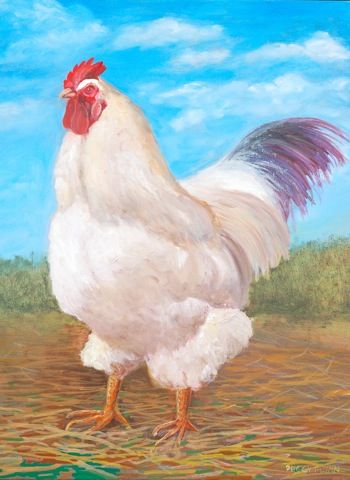
Ruler of the Barnyard

"Ruler of the Barnyard"
16x20 oil on canvas
I found this fellow at Shakertown in the same barnyard as the turkey I pictured HERE. I'm not sure who actually ruled the roost since the turkey was much larger, but this rooster appeared to be the boss! But then, so did that turkey! I haven't painted the turkey yet: I'm not sure I'd want to look at his portrait, at least not at Thanksgiving time. Besides, I think roosters are handsome and more regal.

Happy Thanksgiving!

Sunday, November 3, 2013

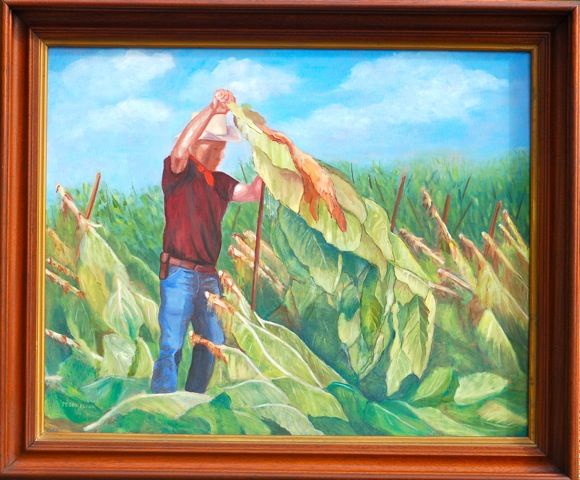
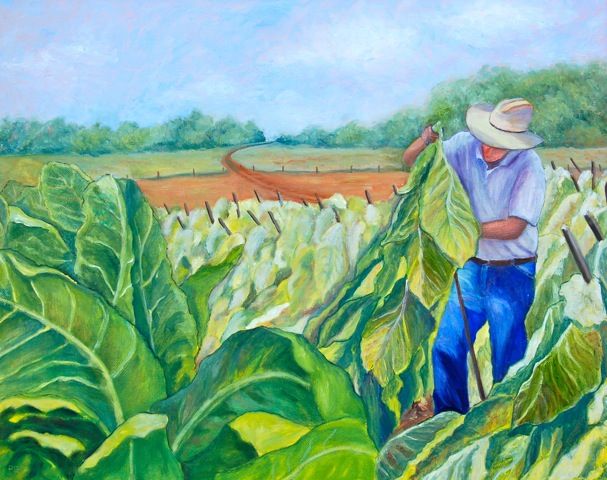
The Spiker

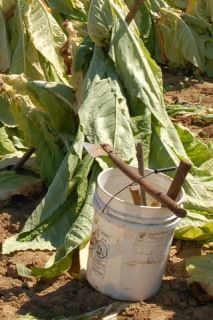
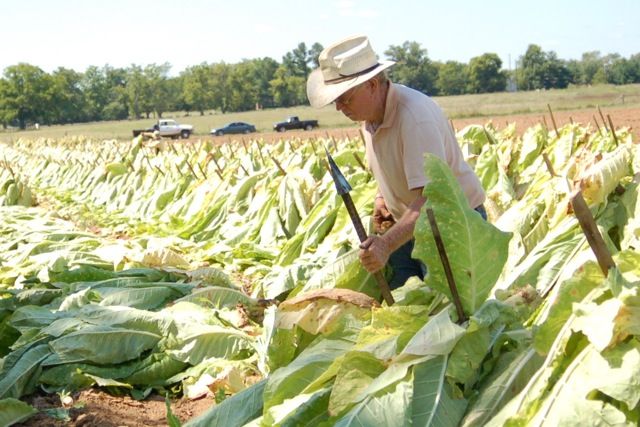
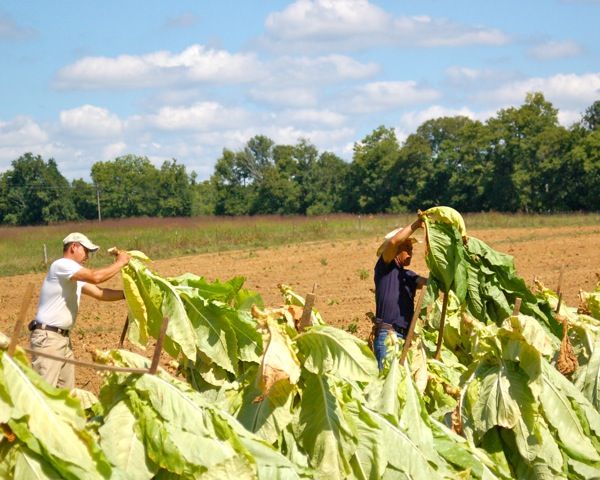
As you may know, I live on a farm where burley tobacco is grown. You can read more about the crop in my posts listed HERE and specifically about harvesting the crop HERE and HERE. Cutting tobacco is done in August and early September. It is a tough job of bending down and lifting repeatedly, working in the hottest part of the summer... it takes strong men to do it! The full-grown plants are massive, as tall as a man's head, and brittle. Great care must be taken not to break off the leaves. Each plant is cut by hand using a small hatchet-like tool called a tobacco knife and then laid gently on the ground.

"The Spiker"
24x30 oil on canvas

Then the tobacco is spiked onto tobacco sticks, wooden sticks about 4 feet long. The worker places a sharp metal cone... a spike... over the stick and impales the stalks of five plants onto each stick. The sticks filled with tobacco are forced upright in the ground. They remain there for three days  to wilt before the crop is moved to the barn for curing.

The man in my painting has worked on our farm for almost twenty years. He is strong and rugged. I wanted to capture that in my artwork. Spiking tobacco is daunting work!

Sunday, October 6, 2013

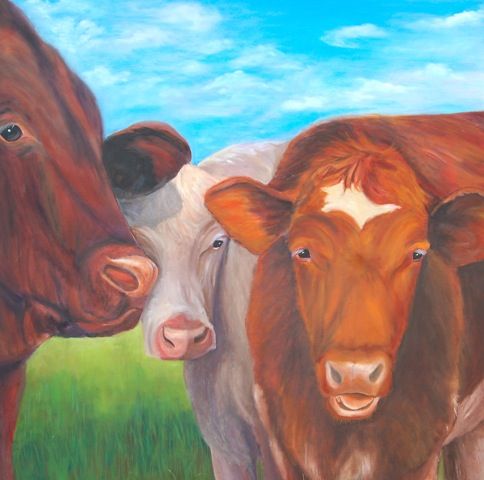
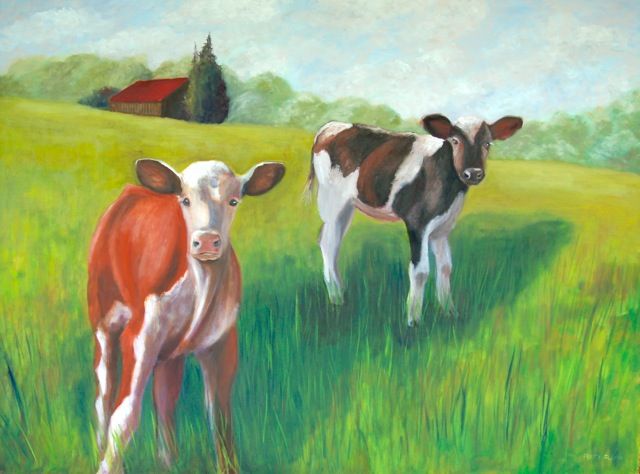
Clarence Explains How He Became a Steer

Do you think his friends found it shocking?

"Clarence Explains How He Became a Steer"
30x30 oil on canvas

I always liked the captions on Far Side cartoons. That led me to this title. Perhaps my sense of humor is somewhat warped.

Tuesday, September 10, 2013

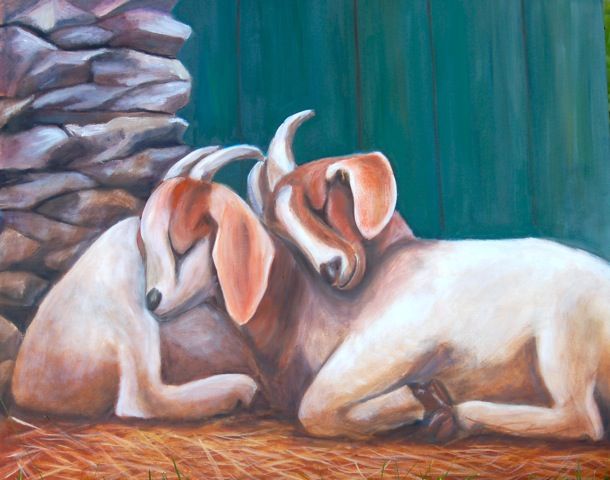
Brotherly Love

"Brotherly Love"
20x24 oil on canvas
When things get too stressful here on the farm, Pa and I like to get away to... well, another farm.


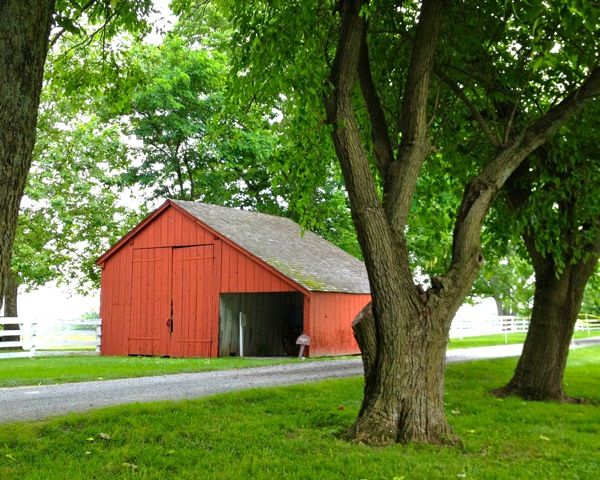
Shaker Village near Lexington, Kentucky is a quaint village of beautiful old buildings built by the Shakers in the early 1800s.  

The setting is rural and peaceful with tall trees, wildflowers, and trails along a creek.


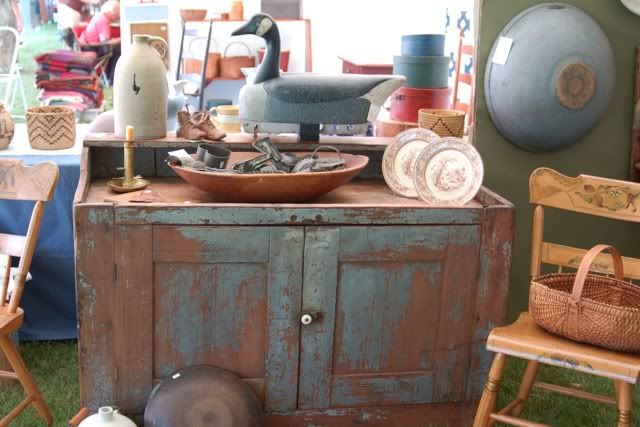
We like to go for their annual antique show in June. Booths are set up under billowing white tents and filled with lovely old pieces, both large and small.


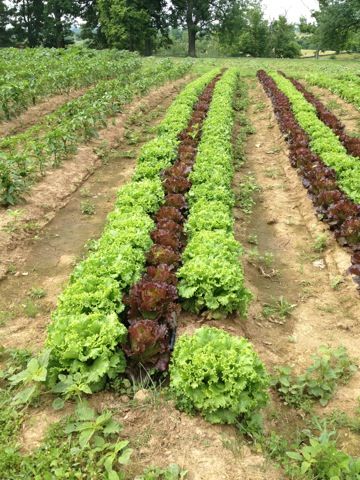
Shaker Village has a good restaurant that often serves produce that was grown in the garden right outside the window. I loved how they planted these varigated rows of lettuce!

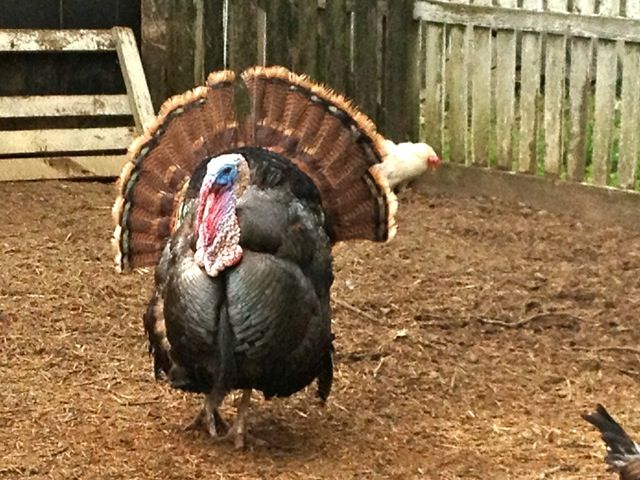
There's a barnyard filled with chickens, sheep, oxen and this big fellow!


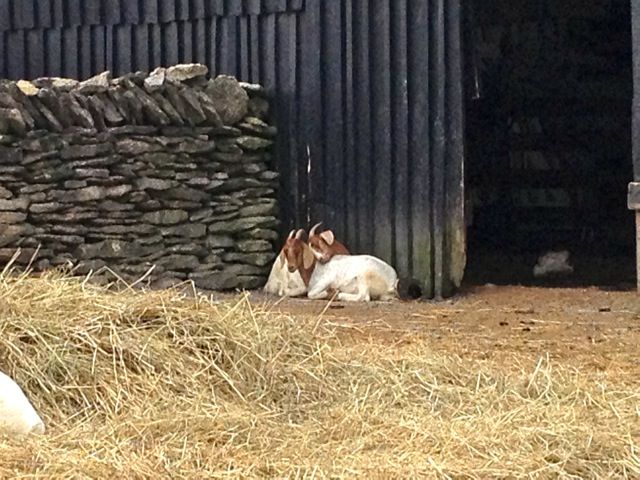
That was where I spied the inspiration for my painting... two goats sound asleep, one using the other's back to rest his head. Unfortunately, I only had my iphone to take their picture... but it worked and I had fun painting them!

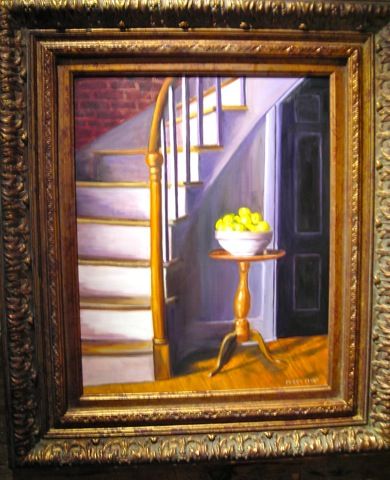
:The Stairs at Shakertown"
16x20 oil on canvas
Several years ago on another trip there, I snapped a photo of the stairs in the restaurant and painted that too. Shakertown is a pleasant place to visit and it seems a good resource for subject matter to paint!
Thursday, August 1, 2013

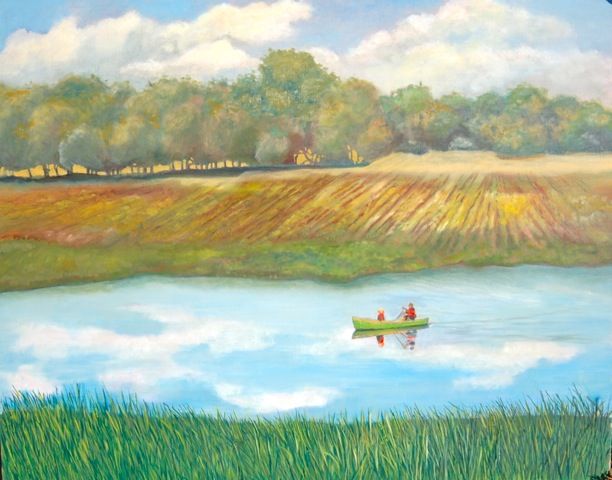
Canoeing with my dad

Earlier this summer, we had a family reunion. It was held at my brother-in-law's farm in the middle of nowhere. Each of the children took a canoe ride with dad.


It was a beautifully sunny day. I loved how the clouds were reflected in the water.
This painting will remind us of a fun day in the country.

"Canoeing with my dad"
24x30 oil on canvas

Sunday, July 14, 2013

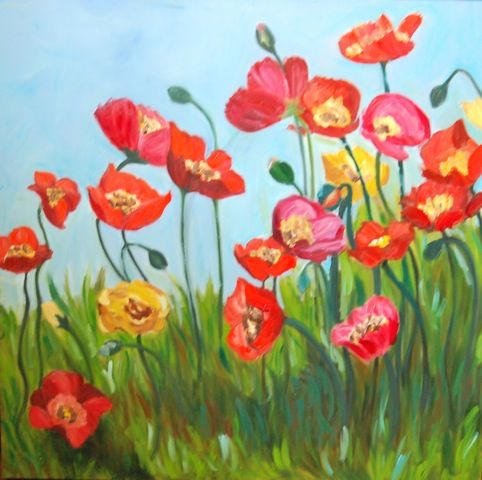
Pink Poppies for the Nursery

Several years ago, I painted these brightly colored poppies for my daughter to hang over the mantel in her New York apartment.
Poppies
36 x 36 oil on canvas
She married and moved to an apartment with no fireplace so the poppies spent some time stored in her mother-in-law's basement.

Recently, they've moved again... this time across the country! The poppies now hang in my new granddaughter's nursery.


There was a slight problem... the poppies needed to be pink! Grandma Peg traveled with tubes of permanent rose and zinc white. Voila!!! Pink poppies... easy peasy!


The room is not quite finished, but here's a sneak peak!

Thursday, July 4, 2013

Happy 4th on the Farm!

We'll be celebrating a rainy Fourth of July here on the farm, but that's a good thing for crops and cattle. We need the rain, but hopefully it will subside in time for an evening cook-out!
30x40 oil on canvas
This is a large painting that I did three years ago for a young lady who never came to pick it up... that's one reason I don't like commissions! There were a couple of things that bothered me about the painting so I recently reworked the problems and now I'm pleased with it. The large size is perfect to hang over a couch or perhaps in a little boy's nursery.
Wednesday, June 12, 2013

What's Black and White and related to dairy?

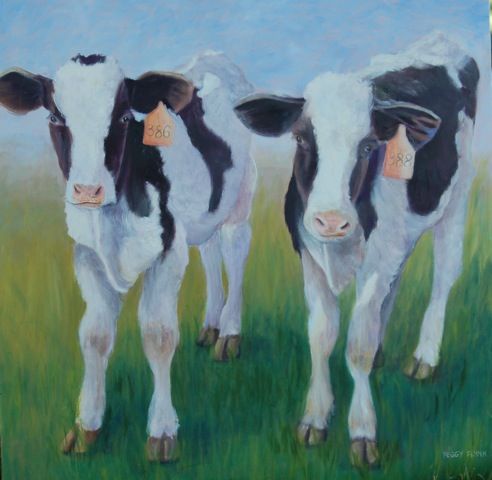
Summer is a busy time for me with trips, gardening, and visits from grandchildren. I have had little time for painting, blogging, or even cooking! Right now I'm just beginning two new paintings. When I'm finished, I'll post them here. In the meantime, here's a painting of two Holstein babies.
"Holstein Calves"
24x24 oil on canvas
Holsteins are primarily for milk production; they're dairy cows. Since they're not beef cattle, Pa doesn't have any on our farms. Maybe because of the Chic Fil A cows, I think their black and white spots are pretty cute. I photographed this pair on a visit to Texas several years ago and finally found time to paint them!

Ice Cream Sandwich Cake

Speaking of black and white and dairy products, I made a terrific dessert last weekend... an ice cream sandwich cake. I filled a glass baking dish with a layer of ice cream sandwiches... the cookies 'n cream kind. Then I spread a layer of Cool Whip and sliced strawberries on top and drizzled them with chocolate syrup. Next was a second layer of ice cream sandwiches. I used a second tub of Cool Whip to cover the top and sides of the cake. Finally, I added more strawberries and chocolate syrup and put it in the freezer until I was ready to serve it. Delicious and so easy, I think it would be great with caramel topping and nuts too.

Thursday, May 23, 2013

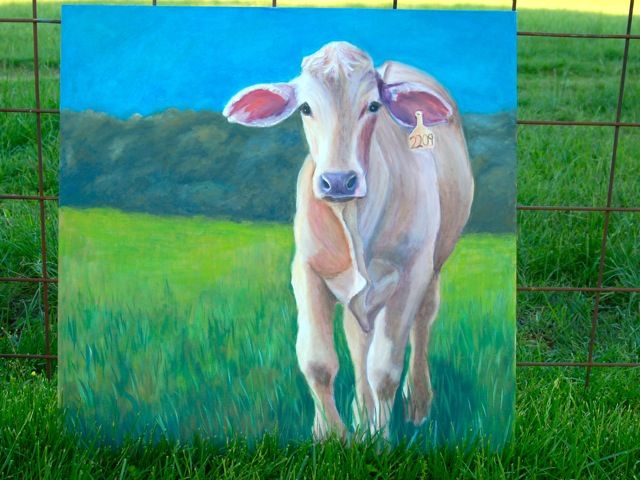
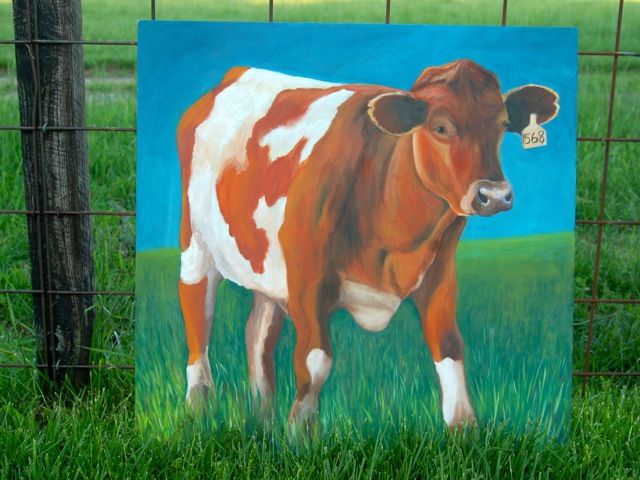
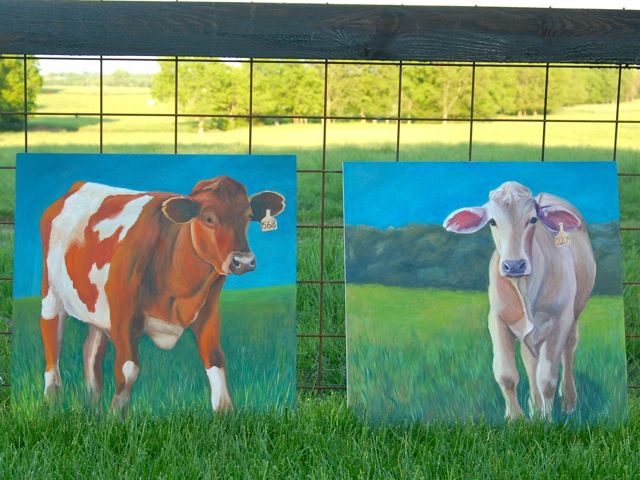
Another big steer

This time I painted a white steer, probably a Charolais with a bit of Brahma in his background. 
30x30 oil on canvas

He was in the same group of steers as this colorful one I painted a few months ago.

30x30 oil on canvas

When I propped the finished paintings against the fence to photograph them, I was pleased to see that the grass in the paintings blends right in with the real stuff on the ground!


I think they make a nice pair!

Sunday, May 12, 2013

The Original Four Seasons of Tobacco

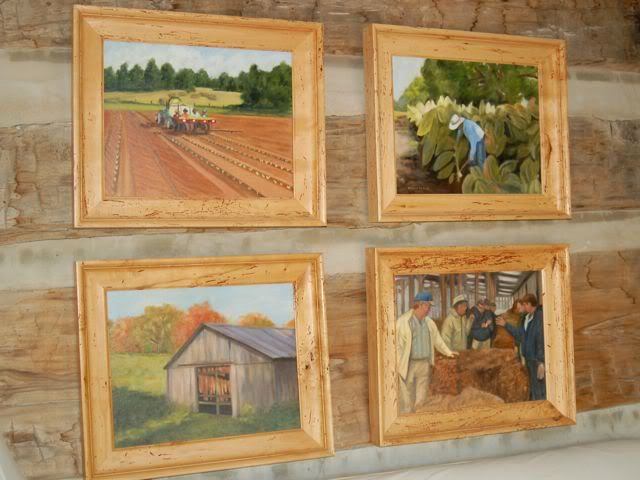
Many years ago I saw a brochure featuring a group of drawings or paintings called "The Twelve Months of Tobacco."  The artist, Toss Chandler, was commissioned by Philip Morris, Inc. to depict the tasks necessary to raise a crop of tobacco from planning it in January to selling it in December.  I looked for prints of the series but never found them, so when I first started painting, I decided to try to paint something similar. Not wanting to do twelve paintings, I cut it down to the "four seasons of tobacco."

"The Four Seasons of Tobacco"
four 16x20 oil on canvas
Over the years as my skill as an artist has improved, I have repainted the series and even added a fifth painting. However, the painting below has only been retouched. There is a reason for that... 

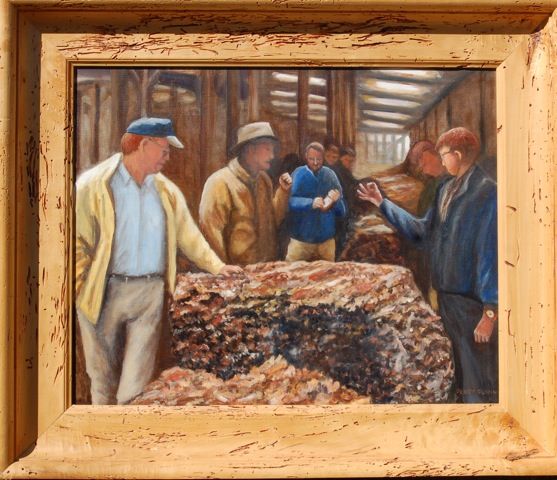
"Tobacco Auction"
16x20 oil on canvas

At the time I painted the tobacco auction, I was taking art lessons from a wonderful portrait painter. She commands portrait fees in the four and five figure category, depending on the size of her finished work. The auction painting was the first time I'd tried to paint faces; they're so difficult! My teacher felt sorry for me and offered to paint Pa's face so it would actually look like him. She did a beautiful job! I was so excited to show it to Pa. I had a painting that was partially done by a master portrait artist!

He took one look at the painting and said, "My chin doesn't really look that bad, does it? Take it back and ask her to fix my chin!" So there I was, taking a portrait that my teacher had painted for free back to a portrait painter who gets big bucks for her work!

When I told her what Pa had said, she laughed. "Men are so vain!" she said as she made him look ten years younger. Pa was one happy man! And needless to say, I'm not going to attempt to repaint that one until I, too, become a master portrait artist... and I don't see that happening anytime soon!

In these posts, you can see the four paintings I painted recently, replacing three of those above, and read about the process of growing burley. To learn more about how tobacco was sold, click the last link.


Friday, May 10, 2013

Planting and Plowing

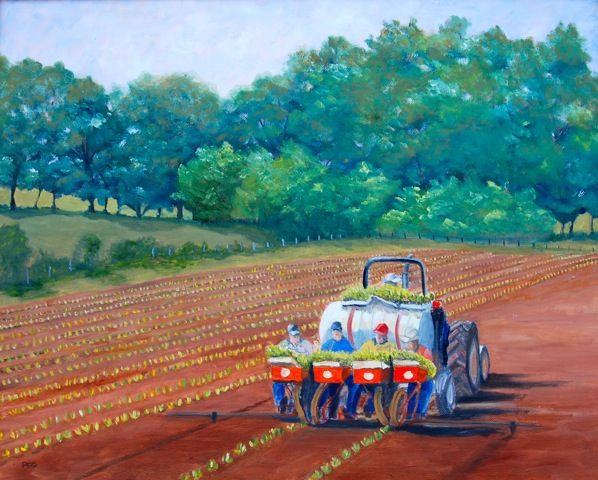
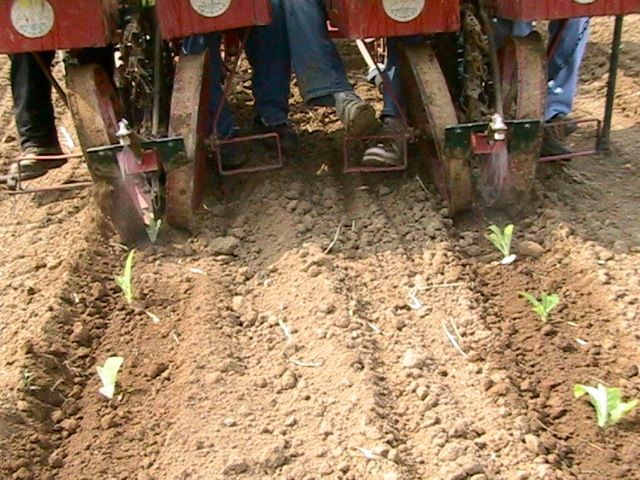
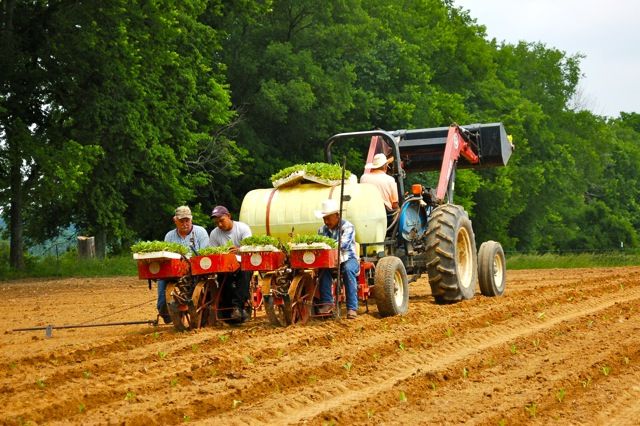
"Setting Tobacco"
16x20 oil on canvas
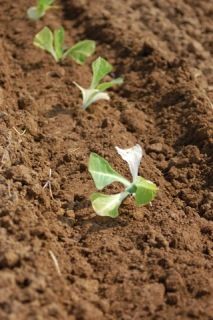
Burley tobacco is planted or set in late May.


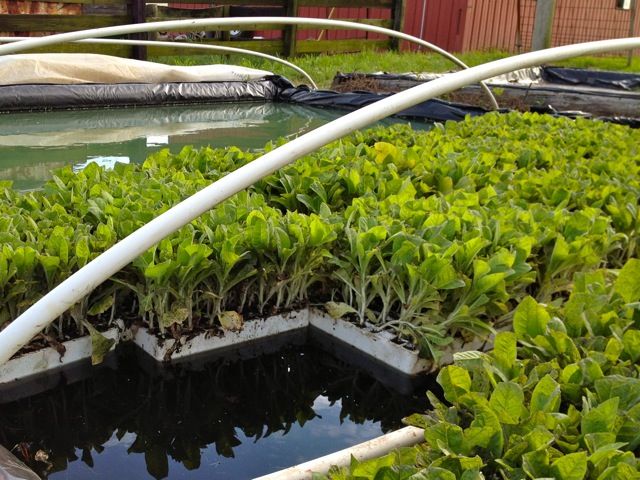
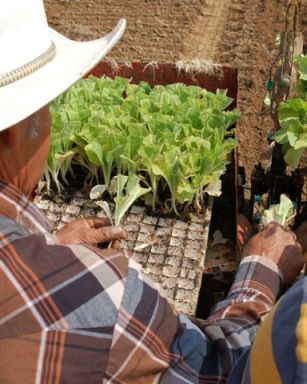
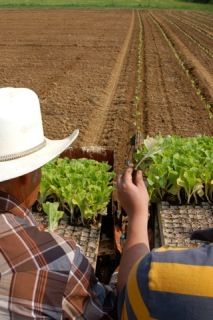
The seedlings are grown from seed in a greenhouse where the styrofoam trays are floated in water.


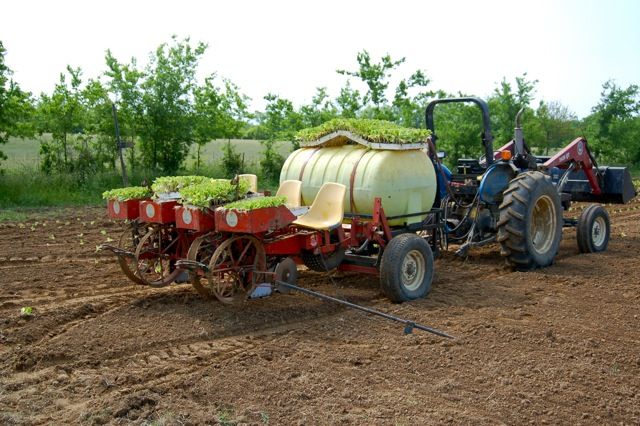
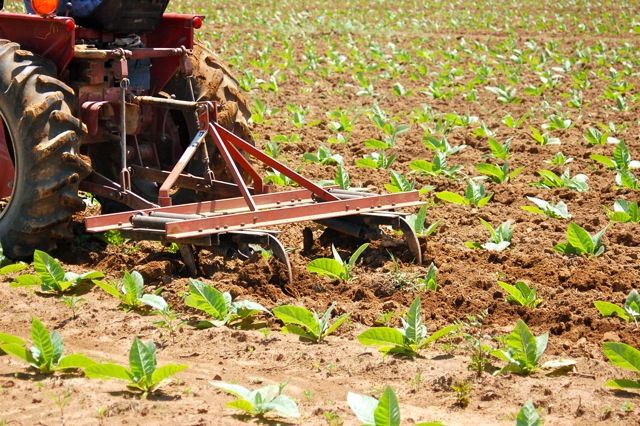
A tobacco setter is pulled through the plowed field behind a tractor. There are seats for four men and a tank for water.

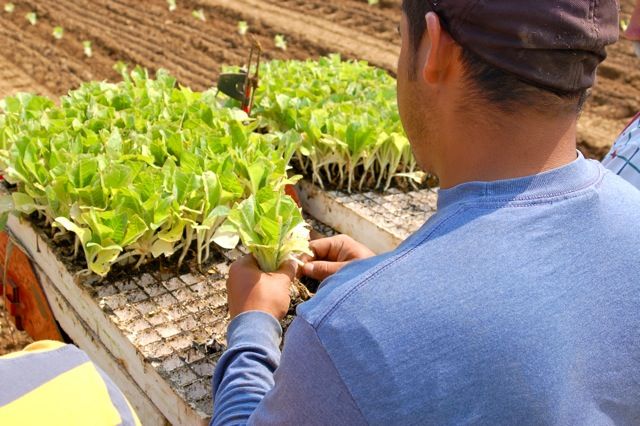
The setter has two rotating wheels with slots.

As the wheels turn, the men take turns placing a seedling in each slot.

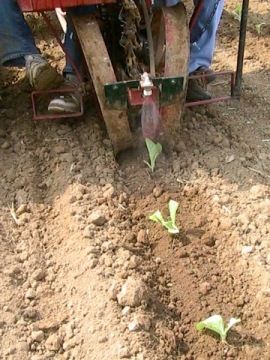
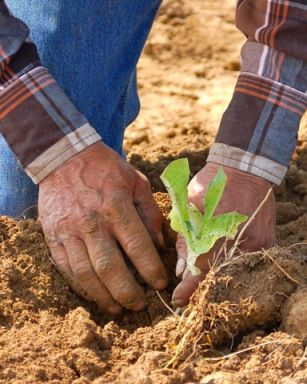
They have to work quickly to place each seedling at just the right place so that it will be mechanically planted at the correct depth. Otherwise, the plant will not live.


As the machine plants each seedling, it gets a squirt of water with fertilizer.

Up and down the field, the setting crew works

planting two rows at a time.

If a seedling doesn't live, it has to be replaced the hard way... by hand!

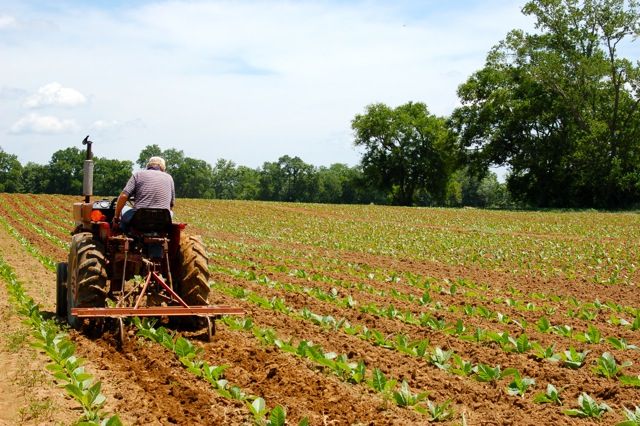
The plants grow quickly. By early June, it is time to plow.


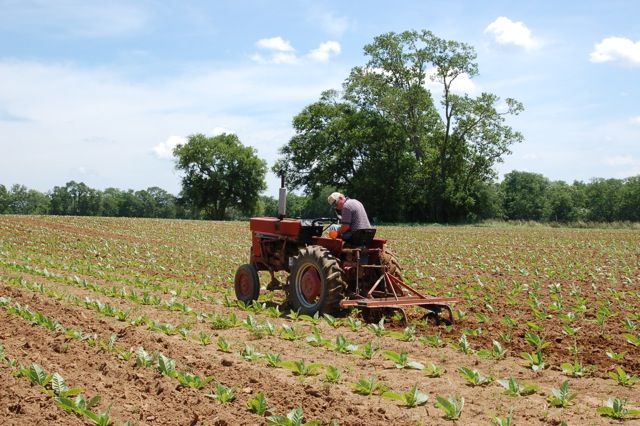
Plowing is a slow and tedious job. Pa is very picky and usually does all the plowing himself.


He adjusts the plow so it cultivates the plants at the right depth.


The crop will be fertilized, sprayed for disease, and topped to prevent suckers. By late August, it will be 5-6 feet tall and ready to be cut.


Monday, May 6, 2013

Burley Tobacco Harvest

"Cutting Tobacco"
16x20 oil on canvas
Burley tobacco is ready to harvest in late August, the hottest part of the summer! Because the leaves are fragile and break easily, the crop has to be cut by hand.

Workers use a small knife that looks like a hatchet.

Wooden sticks about 4-feet in length are distributed through the field.

A metal cone-shaped "tobacco spike" is placed on top of the stick to provide a sharp point.


Then stalks of tobacco are forced over the spike, splitting the stalk.
Five stalks are placed on each stick.

The process is called "spiking" tobacco.

The tobacco is usually left in the field for three days to wilt and dry out.
Then it is loaded onto trucks and hung in a barn to cure.

Monday, April 29, 2013

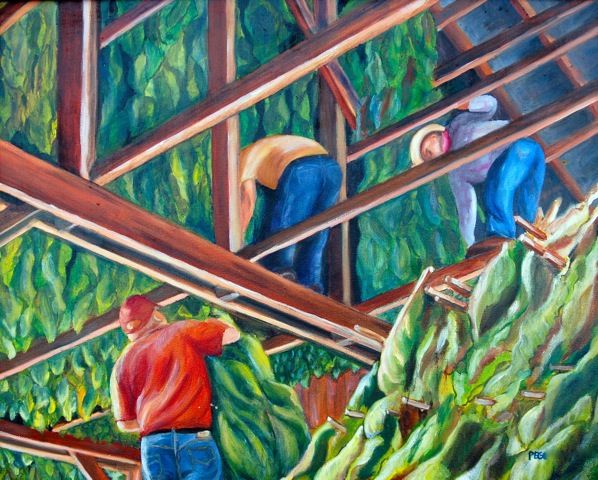
Hanging Tobacco in the Barn

"Housing Tobacco"
16x20 oil on canvas
Burley tobacco is a very labor-intensive crop. The harvest is all done by hand. Because the leaves are so brittle, it can't be mechanized. The plants are cut down using a special tobacco knife that looks like a small hatchet. Then, using a sharp, cone-shaped, metal spike, five stalks are placed on a four-foot tobacco stick. The spiked tobacco is left in the field for several days so it will wilt and be easier to handle. Then it's loaded on trucks to be hung in barns.


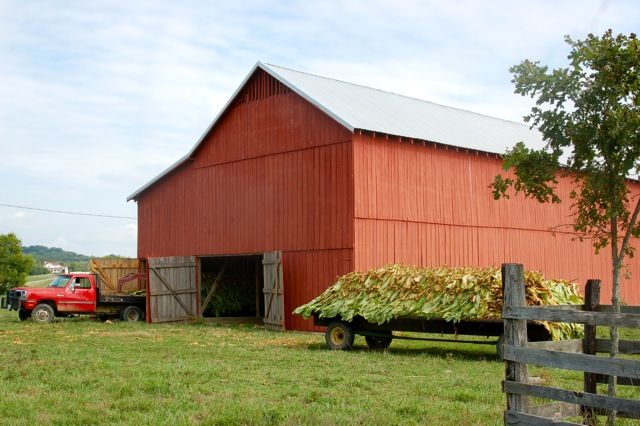
The trailer loads of tobacco are pulled into the barn. Tobacco barns are designed with rows of wooden tiers about three feet apart, just the right width to hang the sticks of tobacco. 


Then the sticks of tobacco are handed up to the waiting men

who hang them on the tiers

or pass them on up to the guys above them.

Up and up they go,

over and over again,

all the way to the top!
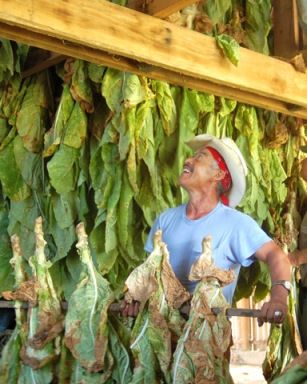
The tobacco will stay in the barn for six to eight weeks to cure. The leaves turn golden brown. On damp, rainy days in October, it will be taken down, stripped from the stalks and packed in bales of various grades. 

"Up, Up, Up"
18x36 oil on canvas